Targeted cockroach remediation requires understanding species-specific biological drivers rather than applying arbitrary surface sprays. In dense older residential architecture throughout the Old West End and historic…
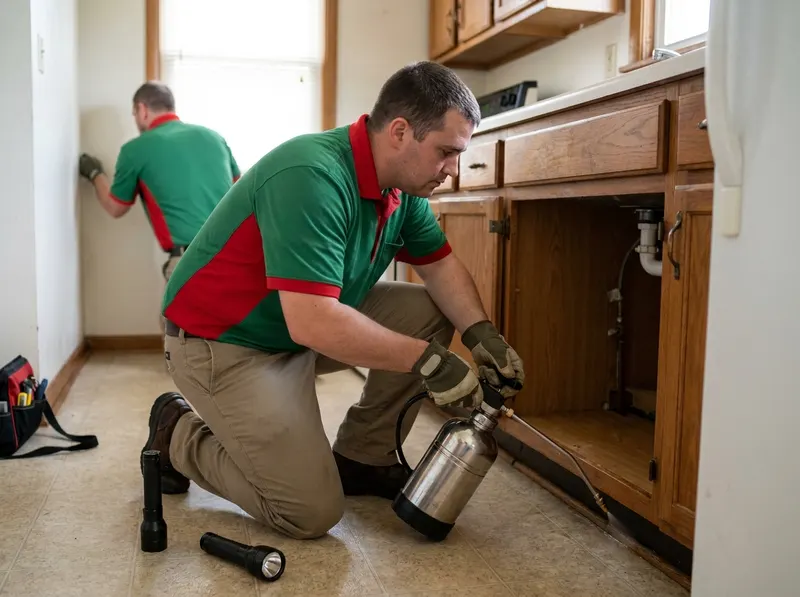
Targeted cockroach remediation requires understanding species-specific biological drivers rather than applying arbitrary surface sprays. In dense older residential architecture throughout the Old West End and historic duplexes in East Toledo, German cockroaches thrive inside void spaces behind drywall, kitchen baseboards, and the mechanical compartments of refrigerators and dishwashers. A female German roach carries an ootheca containing 30 to 40 nymphs, meaning an undetected cluster multiplies into hundreds of insects within 60 days. Over-the-counter repellent aerosol sprays disperse these populations into adjacent bedrooms and hallways, worsening structural colonization. Professional intervention relies on non-repellent indoxacarb or dinotefuran gel matrices placed in discrete bead increments where roaches groom and transfer toxicant horizontally throughout the population.
Cockroach selection determines protocol: German roaches require interior micro-baiting and crack-and-crevice application of juvenile hormone mimics, which stop juveniles from reaching reproductive adulthood. Oriental roaches and American roaches, frequently encountered along Point Place waterfront foundations and damp basements in Birmingham or South End near Swan Creek, follow water lines and exterior crawlspaces. For these peri-domestic species, remediation shifts toward exterior perimeter barrier bands, crawlspace desiccant dust applications, and sealing floor drains and utility pipe penetrations through brickwork. The physical trade-off in cockroach eradication is immediate population reduction versus reproductive cycle management: adult roaches die within 48 to 72 hours of bait consumption, while unhatched egg cases require a scheduled 14 to 21 day follow-up to neutralize emergent nymphs before they mature.
Structural factors across Toledo influence long-term eradication stability. Multi-family brick properties in Five Points and older housing stock near Ottawa Park often feature shared utility chaseways that allow insects to migrate between living units. In single-family homes throughout Beverly, West Toledo, and Reynolds Corners, moisture accumulation under crawlspaces and aging galvanized plumbing creates localized harborage. Containment protocols isolate these pathways through expanding foam sealants and copper mesh around pipe transitions, eliminating moisture contact points and removing the biological resources necessary for re-infestation.
Every job gets a firm, written price after a free on-site visit.
Tell us about your cockroach control job in Toledo and we'll send a clear, written quote, usually the same day.
 Jorvian Pest Management