Subterranean termites require continuous access to soil moisture to survive, entering Toledo homes through hairline foundation cracks as narrow as 1/32 of an inch or via protective mud shelter tubes. In historic areas…
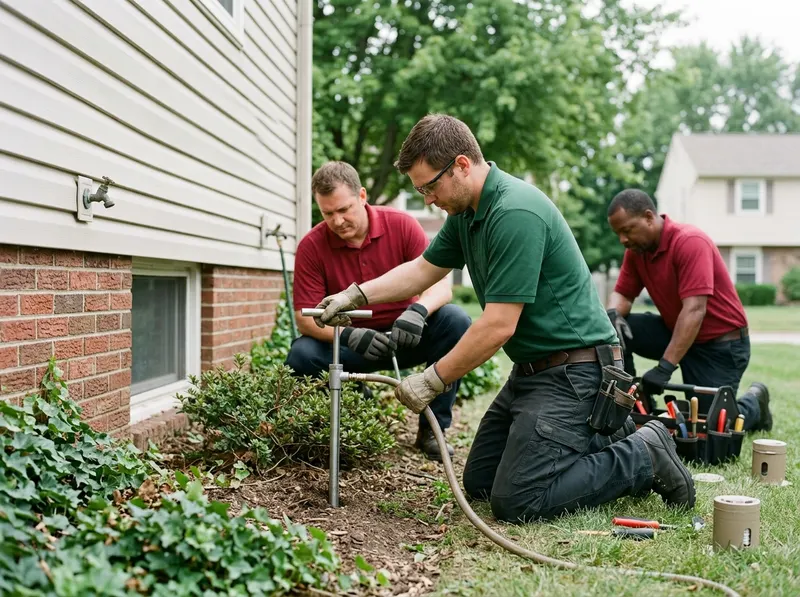
Subterranean termites require continuous access to soil moisture to survive, entering Toledo homes through hairline foundation cracks as narrow as 1/32 of an inch or via protective mud shelter tubes. In historic areas such as the Old West End and Five Points, older rubblestone and hollow concrete block foundations offer natural entry paths into floor joists and sill plates. In river-adjacent soils throughout Point Place and East Toledo, high water tables elevate structural moisture levels, accelerating wood cellulose degradation. Addressing these colonies requires establishing an uninterrupted chemical barrier through soil rodding or trenching, or deploying non-repellent bait stations every 10 to 15 linear feet around the structure exterior.
Selecting between perimeter liquid applications and baiting arrays depends on foundation construction and exterior hardscaping. Liquid soil barriers using non-repellent termiticides establish an immediate continuous zone around the foundation, transferring the active agent through natural social grooming to neutralize the subterranean queen. This method suits properties in Beverly and Reynolds Corners featuring standard continuous poured concrete perimeters and open soil borders. However, liquid treatment demands drilling through attached concrete slabs, patios, and garages to reach underlying dirt.
Conversely, baiting systems eliminate the need for drilling through finished masonry by placing monitoring stations directly into perimeter turf. These stations target foraging worker termites using an insect growth regulator (IGR) that halts the natural molting process, causing total colony collapse within 60 to 90 days. While bait systems eliminate structural disturbance around decorative brick walkways in Ottawa and West Toledo, they require ongoing monitoring visits every 60 to 90 days to maintain active bait supplies. For localized framing activity near plumbing access points in the South End or Birmingham, localized spot injections offer an initial containment boundary starting at the $250 minimum service tier.
Every job gets a firm, written price after a free on-site visit.
Tell us about your termite control job in Toledo and we'll send a clear, written quote, usually the same day.
 Jorvian Pest Management