Nuisance animals exploit thermal drafts and construction gaps along rooflines, crawlspaces, and foundations. In mature Toledo neighborhoods such as the Old West End and Ottawa, century-old soffits and fascia boards…
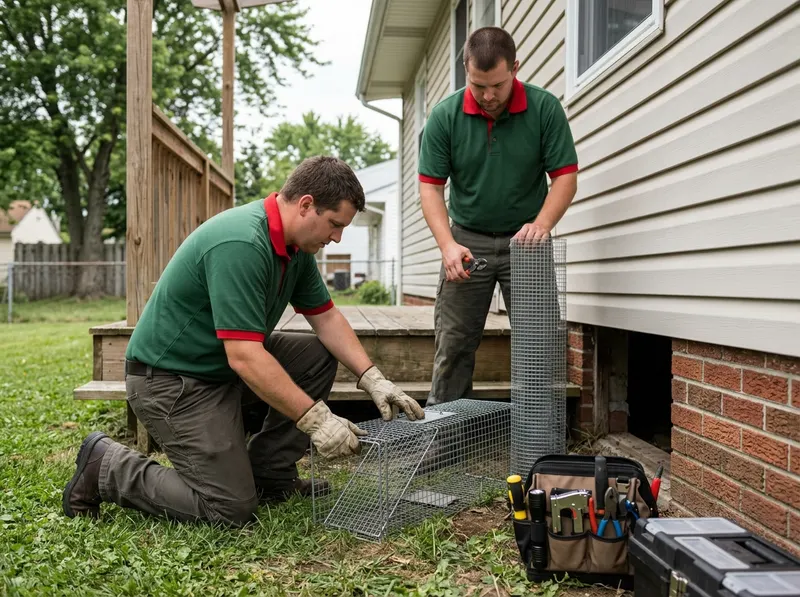
Nuisance animals exploit thermal drafts and construction gaps along rooflines, crawlspaces, and foundations. In mature Toledo neighborhoods such as the Old West End and Ottawa, century-old soffits and fascia boards present easy entry routes for raccoons and squirrels seeking nesting territory. Waterfront corridors in Point Place and properties bordering Swan Creek Preserve Metropark face seasonal migrations of skunks and opossums burrowing under low-clearance decks and concrete pads. Urban wildlife vectors carry biological hazards, including leptospirosis, histoplasmosis spores within guano deposits, and roundworm eggs inside raccoon latrines. Treating these intrusions as mechanical and biological challenges ensures complete extraction without unnecessary structural tearing or toxic applications.
Effective wildlife control relies on permanent exclusion rather than short-term trapping alone. Installing hardware cloth barriers across foundation vents prevents skunks in Birmingham from digging subterranean dens, while commercial-grade steel ridge vent guards stop squirrels in West Toledo from gnawing into attic insulation. If animal activity occurs exclusively within open yards without structural entry, non-lethal habitat modification serves as the proper alternative; if animals breach structural envelopes, professional mechanical exclusion becomes required. The operational trade-off centers on upfront capital: simple live-cage trapping removes the immediate animal quickly, but omitting structural steel seal-ups leaves entry points vulnerable to secondary animal colonies within weeks.
Ohio Division of Wildlife regulations mandate specific handling standards for nuisance species to preserve public health and local biodiversity. Big brown bats roosting in attic cavities near the University of Toledo cannot be excluded during the maternal maternity window from mid-May through July 31, protecting non-flying pups from structural entrapment. Raccoons, skunks, and opossums trapped in Lucas County must be humanely euthanized on-site or released on the continuous property where captured pursuant to Ohio Administrative Code 1501:31-15-03, preventing the geographic spread of rabies and distemper. Homeowners in Five Points, South End, and Reynolds Corners receive precise structural repairs using 16-gauge galvanized steel mesh, closing points of vulnerability against future generational nesting.
Every job gets a firm, written price after a free on-site visit.
Tell us about your wildlife removal job in Toledo and we'll send a clear, written quote, usually the same day.
 Jorvian Pest Management