Mosquito control in Toledo requires an understanding of regional hydrology. Toledo rests on the historical footprint of the Great Black Swamp, creating high clay retention soils that hold surface water long after…
Mosquito control in Toledo requires an understanding of regional hydrology. Toledo rests on the historical footprint of the Great Black Swamp, creating high clay retention soils that hold surface water long after rainfall. Properties in low-elevation zones such as Point Place near Lake Erie, waterfront parcels along the Maumee River in South End, and shaded historic lots in Old West End experience distinct vector pressures compared to higher-ground parcels in West Toledo or Reynolds Corners. Culex pipiens, the primary vector of West Nile virus in northern Ohio, requires as little as one-quarter inch of stagnant water in clogged gutters, catch basins, or dense ground cover to complete a 7- to 10-day reproductive cycle.
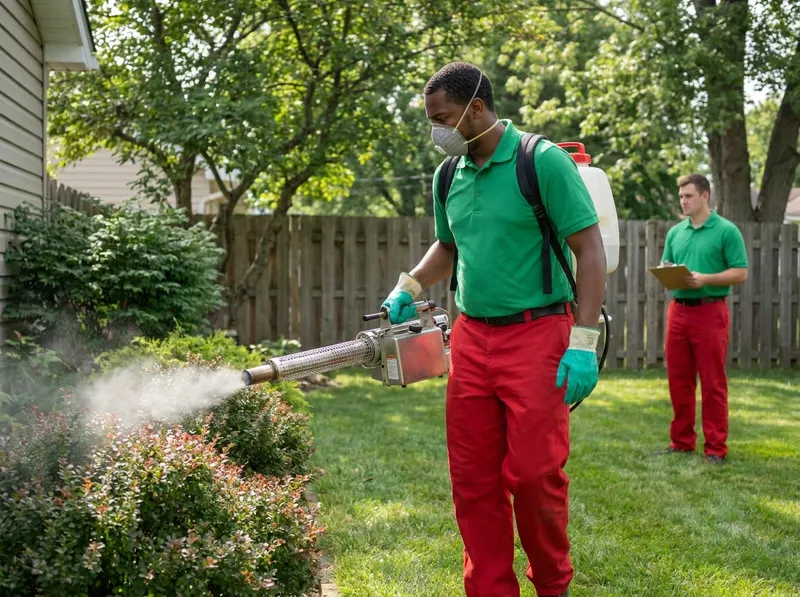
Effective suppression uses Integrated Pest Management (IPM) rather than untargeted perimeter spraying. Larvicidal treatment uses Bacillus thuringiensis israelensis (Bti), a naturally occurring soil bacterium that destroys mosquito larvae in birdbaths, ditches, and ornamental ponds without harming fish, domestic animals, or pollinators. For adult populations resting in dense foliage, specialized mist blowers deliver micro-encapsulated pyrethroids to the undersides of broadleaf plants, boxwoods, and turf edges where adult mosquitoes shelter from daytime heat. Properties bordering Ottawa Park or Swan Creek Preserve Metropark face sustained incoming migrations from municipal greenways, which requires consistent monthly barrier applications from May through September to maintain population suppression.
Homeowners selecting service options must evaluate the operational trade-off between broad-spectrum fogging and botanical micro-misting. Synthetic pyrethroid barriers offer residual control lasting 21 to 28 days by binding to waxy leaf surfaces, surviving light summer rains. Essential-oil botanical formulations provide immediate knockdown with lower environmental persistence, lasting approximately 14 days and requiring more frequent reapplication. Properties with dense ornamental gardens, edible crops, or apiary proximity benefit from manual backpack larviciding paired with targeted spot applications rather than whole-yard misting, ensuring pest mortality while protecting beneficial insects.
Every job gets a firm, written price after a free on-site visit.
Tell us about your mosquito control job in Toledo and we'll send a clear, written quote, usually the same day.
 Jorvian Pest Management